Why Waterproofing Matters Before Johannesburg’s Rainy Season
Johannesburg’s rainy season brings short, intense Highveld thunderstorms rather than steady rainfall, and that pattern is exactly what exposes weak points in a building’s waterproofing. A roof or balcony that’s coped fine through a dry winter can start leaking within the first few heavy downpours of the season. Getting waterproofing sorted before the rains set in is far more effective and more affordable than dealing with water damage once it’s already inside.
Why Johannesburg’s Rainy Season Puts Pressure on Buildings
The Highveld rainy season, typically running from October through to March, is defined by sudden, high-intensity storms rather than prolonged drizzle. Large volumes of rain fall in a short space of time, which puts far more strain on roofs, gutters and drainage points than a slow, steady rain would.
Flat roofs, parapet walls, and balconies that rely on ageing or compromised waterproofing are tested hardest during exactly these conditions. A membrane with a small crack or a joint that’s started to lift may not leak during light rain, but a sudden downpour will find that weak point quickly.
Common Areas Vulnerable to Water Damage
Flat Roofs and Parapet Walls
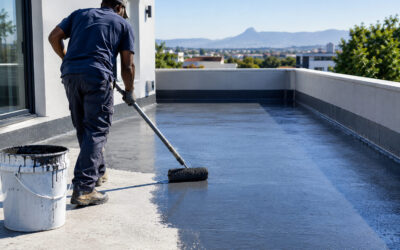
Flat roofs are one of the most common sources of water ingress in both residential and commercial buildings. UV exposure, ponding water, and age all degrade waterproofing membranes over time, and parapet walls are particularly prone to cracking where they meet the roof surface.
Balconies and Patios
Balconies see constant foot traffic and direct rain exposure, which wears down waterproofing coatings faster than most other surfaces. A balcony that leaks into the room below is one of the most frequent complaints in apartment blocks and multi-storey homes during the rainy season.
Foundations and Retaining Walls
Below-ground structures only show their vulnerabilities once the ground is saturated. A foundation or retaining wall that seemed fine during the dry months can start showing damp patches once sustained rain raises the water table around it.
Gutters and Water Tanks
Blocked or poorly sealed gutters redirect water somewhere it shouldn’t go, often straight down an exterior wall or into a fascia board. Water tanks and reservoirs with worn linings are also prone to seepage once they’re under sustained pressure from heavier rainfall and higher usage.
Why Waterproofing Before the Rains Is Better Than Repairing After
Addressing waterproofing ahead of the season, rather than reacting to a leak once it’s happened, has clear advantages:
- Avoids the higher cost of emergency repairs during peak rainy-season demand
- Prevents water damage to ceilings, paintwork, and interior finishes before it starts
- Allows proper surface preparation and curing time, which many waterproofing products need and can’t get once it’s already raining
- Reduces the risk of mould and structural deterioration from repeated water exposure over the season
Once water has already entered a building, the damage usually extends beyond the original leak point — affecting plaster, paint, and sometimes electrical fittings — which makes the eventual repair bill considerably higher than preventative work would have been.
Choosing the Right Waterproofing Services for Your Property
Not every surface needs the same solution. A flat roof, a below-ground wall, and a water tank each require a different system, applied correctly for the level of exposure they’ll face. Matching the right waterproofing system to each specific surface rather than applying a generic sealant everywhere is what determines whether it holds up through a full rainy season or fails at the first real storm.
A proper inspection before the season starts identifies which areas are still sound and which need attention, so money is spent on what actually needs fixing rather than a blanket treatment across the whole property.
Getting Ahead of the Season
With the rainy season already underway in Johannesburg, the window for preventative waterproofing work is narrowing. Scheduling an inspection now, rather than after the first leak appears, means repairs can be completed and properly cured before the heaviest storms arrive. Many waterproofing products also need a certain number of dry hours to cure properly, which becomes harder to guarantee once the season’s storms are in full swing.
For residential, commercial and industrial properties alike, this is the time of year when waterproofing pays for itself fastest a contained repair now costs considerably less than water damage repairs once a leak has taken hold.
Summary
Johannesburg’s rainy season puts real pressure on roofs, balconies, and below-ground structures, and ageing or damaged waterproofing is most likely to fail exactly when it’s needed most. Inspecting and treating vulnerable areas before the heaviest storms arrive is the most cost-effective way to avoid water damage this season.
To book a waterproofing inspection ahead of the rains, contact Amco Waterproofing on 067 418 5126 or 011 672 2912, email info@amcowaterproofing.co.za, or get in touch online to request a quote.